

Toronto is a city brimming with distinctive features, but few capture the imagination quite like the enigmatic white squirrel.
These aren’t a distinct species, but rather captivating variations of the common Eastern Grey Squirrel (Sciurus carolinensis). Their striking white fur is the result of a genetic mutation, often leucism rather than true albinism. While many people commonly refer to them as “albinos,” most white squirrels exhibit white fur but retain their characteristic dark eyes. True albino squirrels, on the other hand, possess pink eyes.
This distinction is important, as leucism is a recessive gene found within certain Eastern Grey Squirrel populations that causes the reduction or complete absence of pigmentation in the fur, while the eye color remains unaffected. Regardless of the precise scientific classification, these “white morphs” have become an undeniably cherished local icon, considered by some to be a symbol of good luck and a unique emblem of Toronto’s character.
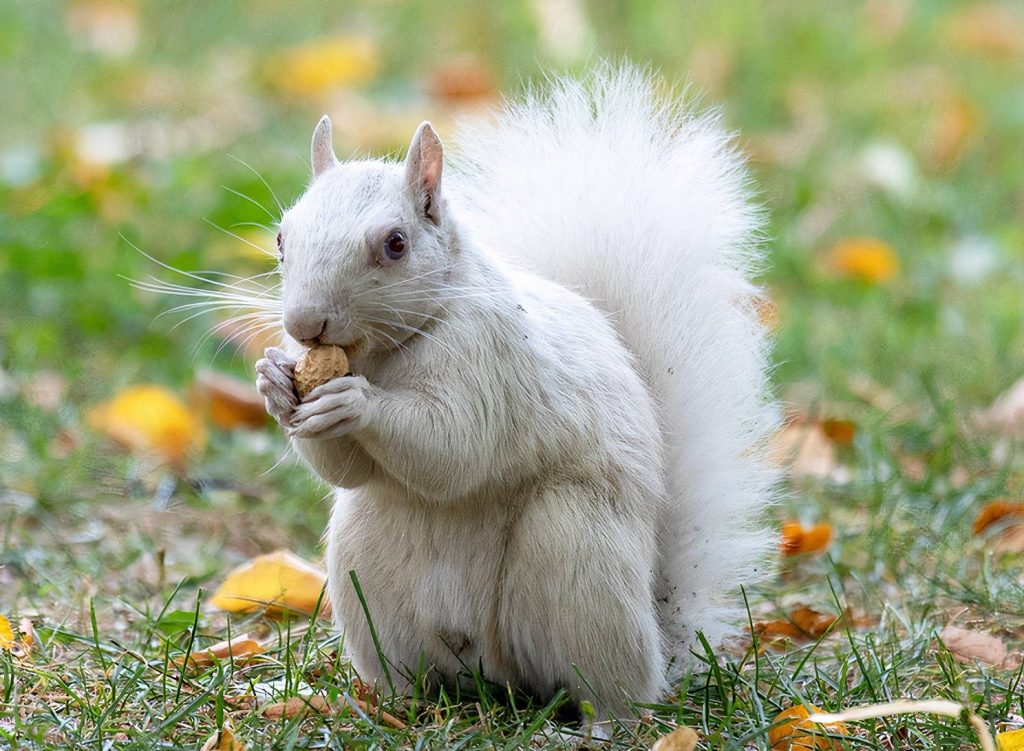
The fascination with these rare animals isn’t unique to Toronto. Across North America, the presence of white squirrels has inspired social group communities, organizations dedicated to their protection from human predation, and their adoption as cultural icons. Projects like Untamed Science actively encourage people to submit sightings of white squirrels, albinos, and other piebald morphs, helping to document their occurrence globally. There are several towns who vie for the title of “White Squirrel Capital of the World.” Olney, Illinois, boasts the largest known white squirrel colony, with a $500 fine for hitting one on the street. Other contenders for the title include Marionville, Missouri; Brevard, North Carolina; Exeter, Ontario; and Kenton, Tennessee, each hosting annual white squirrel festivals and various events to promote their claim.
Here in Toronto, the Trinity Bellwoods Park neighborhood is particularly renowned for its frequent white squirrel sightings, making them a fixture in the local consciousness. For many years, one particular white squirrel became almost legendary around the Centre for Addiction and Mental Health (CAMH) in West Queen West. Sightings in the immediate vicinity fueled the belief that this possibly albino creature was the only one of its kind in the entire world. This burgeoning legend took a dramatic and rather morbid turn when a grainy photograph began circulating, appearing to show the white squirrel electrocuted by power lines above nearby Trinity Bellwoods Park. For many residents, this felt like a tragic end to a beloved local myth.
However, as is often the case with urban legends, the reports of its demise were, thankfully, greatly exaggerated! It soon became clear that there wasn’t just a single white squirrel inhabiting the neighborhood, but now a population within the park and CAMH grounds. By this point, the legend had taken on a life of its own. The white squirrel had become inextricably linked with CAMH, informally adopted as its unofficial “mascot.” Recognizing its profound impact on local lore and community identity, CAMH paid tribute to this beloved creature in 2006 by naming one of the new roads on its redeveloped Queen Street site “White Squirrel Way.” This act solidified the squirrel’s place not just in CAMH’s institutional history, but also in the broader narrative of the West Queen West community.

The white squirrel’s influence extends beyond the park and institutional naming conventions. Its iconic status has also inspired local businesses.
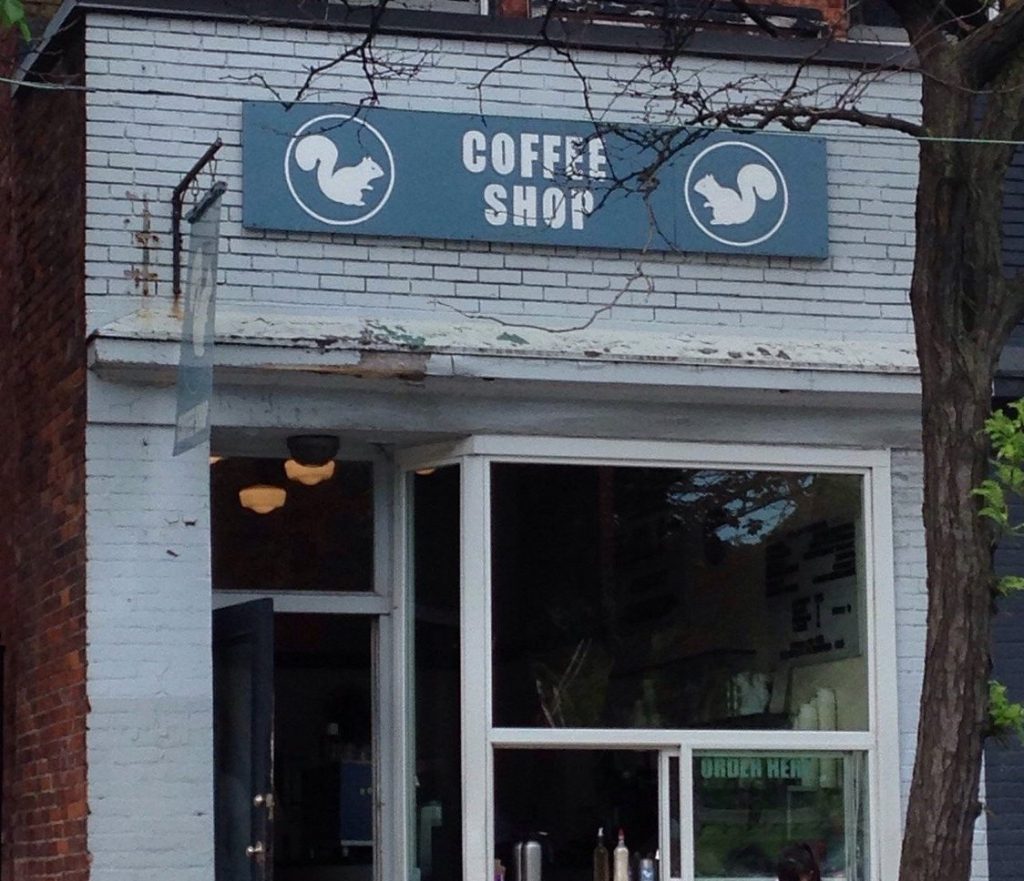
Directly across from Trinity Bellwoods Park, the White Squirrel Coffee Shop stands as a charming testament to these elusive park residents. The cafe serves as a fitting tribute to the local wildlife that has become such a well-known and legendary part of the park’s identity. It’s a place where locals and visitors alike can enjoy a coffee, perhaps while hoping to catch a glimpse of the very animals that inspired the shop’s name. This connection between a natural phenomenon and a beloved local establishment further underscores the deep cultural embedding of the white squirrel in Toronto’s urban fabric.
It is a powerful testament to the enduring appeal of a local legend and the capacity for natural phenomena to become deeply meaningful cultural symbols. The white squirrels have not only inspired art and community initiatives—like the aforementioned White Squirrel Way. but they have also become a grassroots tourist attraction, drawing people to Trinity Bellwoods Park with the hope of encountering these rare and enchanting creatures first hand.

So, the next time you find yourself on Queen Street West, or strolling through Trinity Bellwoods Park, keep an eye out for these special creatures – whether in the flesh, or in their newly immortalized artistic form. They are a truly captivating part of what makes Toronto such a fascinating place.
 Black Frog Communications